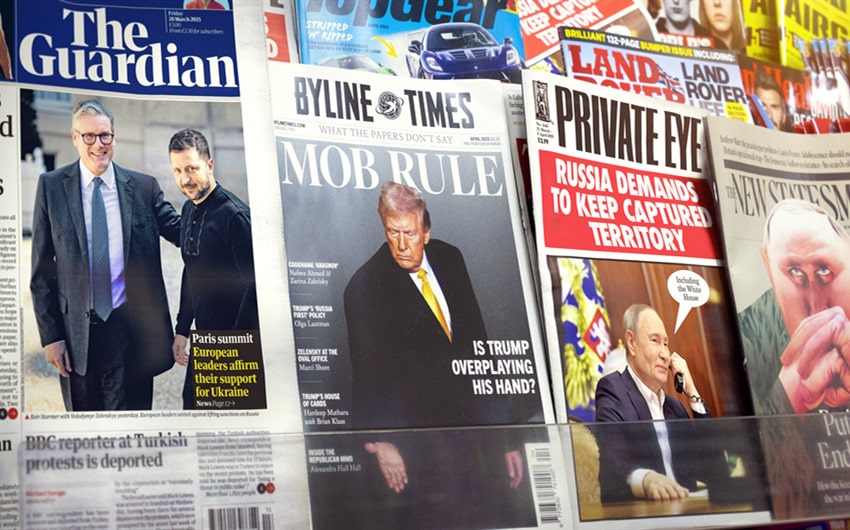
Why Headlines Feel So Extreme Now and What They Always Leave Out
Headlines feel sharper than they used to, and it’s not just your imagination. Why headlines feel so extreme now has a lot to do with how information is sold, sorted, and shared online. The problem isn’t only the drama—it’s what gets left out: context, nuance, uncertainty, and the “boring” details that actually help you understand what’s true.
Headlines Aren’t Written to Inform You First
This is the uncomfortable starting point: a headline’s first job is rarely to inform. Its first job is to earn attention.
That doesn’t automatically make every headline dishonest, but it does explain the tone. Headlines are competing with everything else on your screen—texts, videos, posts, notifications, and the emotional pull of a thousand other things. In that competition, calm loses. Specificity loses. Nuance loses.
What wins is what triggers a reaction quickly. Surprise. Anger. Fear. Outrage. Triumph. Mockery. Anything that makes you click, share, or keep reading.
So when headlines feel extreme, it’s often because extremity performs well.
The Attention Economy Rewards Emotional Language
Most media businesses operate in an attention economy. Attention is the product. Ad revenue, subscriptions, sponsorships, and influence all depend on how many eyes stay on the page.
Emotional language increases engagement because it creates urgency. If a headline suggests something is alarming or infuriating, your brain treats it like a priority. You click to resolve the tension.
This is why you see words and framing like:
- “Shocking” and “devastating”
- “Slams” and “destroys”
- “Terrifying” and “dangerous”
- “You won’t believe” and “Experts warn”
- “This changes everything”
These words don’t necessarily reflect the actual story. They reflect what’s likely to get a response.
Algorithms Amplify the Loudest Version of the Story
Even if a publication tries to be responsible, social platforms and search systems still shape what you see.
Algorithms tend to amplify what people engage with. Engagement is often strongest when content is emotionally charged. So the most extreme framing spreads farther and faster, not always because it’s the most accurate, but because it creates the strongest reaction.
This leads to a strange outcome: the headline you see most often is not the clearest one. It’s the most clickable one.
Over time, this changes headline-writing culture. Writers learn what works. Editors push what performs. And audiences get trained to expect intensity, even when the story is ordinary.
Speed Changes the Shape of Information
News moves faster than ever. That creates a constant pressure to publish first, update quickly, and keep stories moving.
Speed has a cost. It reduces verification time. It encourages early framing before all facts are in. It rewards certainty even when the situation is still developing.
This is a big reason headlines feel extreme: it’s easier to publish a strong frame than a careful one. “Everything is falling apart” travels faster than “We don’t know enough yet, but here’s what’s emerging.”
But “we don’t know yet” is often the truth.
Conflict Is Easier to Sell Than Complexity
Headlines are often structured around conflict because conflict is easy to understand quickly. It creates a storyline with clear sides.
But reality usually isn’t that simple.
Complex issues have trade-offs. Multiple causes. Unclear outcomes. Mixed evidence. Competing values. That kind of complexity is harder to compress into a headline, and it’s harder to share in a single post.
So what happens? Complexity gets squeezed into conflict. Stories become “X versus Y.” People become heroes or villains. Policies become “successes” or “disasters.” And nuance gets treated like weakness.
The headline isn’t lying in a direct way. It’s simplifying in a way that distorts.
What Headlines Commonly Leave Out
When a headline feels extreme, it often leaves out the details that would make it feel more normal. Here are some of the most common missing pieces.
1) The Base Rate (How Common This Really Is)
A headline might make something sound like a widespread crisis when it’s actually rare.
For example, a story about a “surge” can be true, but if the numbers went from 2 cases to 6, that’s still a surge—just not the kind your brain imagines.
Without base rates, your mind fills in the gap with worst-case assumptions.
2) The Time Frame (Is This a Long Trend or a Short Spike?)
A statistic can look terrifying when you don’t know the time frame. A one-month spike is different from a ten-year trend.
Headlines often highlight the most dramatic slice of time because it produces the strongest reaction. The story may be real, but your sense of scale may be wrong.
3) The Comparison Point (Compared to What?)
“Inflation rises.” “Crime increases.” “A record number.”
Compared to last month? Last year? A decade ago? A pandemic-era anomaly? A unique event?
Without a comparison point, a headline becomes a floating alarm bell.
4) The Uncertainty (How Solid Is the Evidence?)
Many stories are based on early reports, partial data, or emerging research. Responsible reporting should include uncertainty, limitations, and what is not yet confirmed.
But uncertainty weakens the emotional punch of a headline. So it gets pushed into the article—or disappears entirely when the story is reposted elsewhere.
5) The Trade-Offs (What Does This Cost?)
Policy stories are a classic example. A headline may celebrate a “solution” without acknowledging the trade-offs, side effects, or who pays the cost.
Or it may condemn an outcome without acknowledging the benefits that motivated it.
Trade-offs make stories more honest, but less shareable.
Why Headlines Often Feel Personal Now
One reason headlines feel more intense is that they’re increasingly personalized through your feed.
You aren’t seeing “the news.” You’re seeing the version of the news that your online behavior predicts will hold your attention.
If you click on anxiety-provoking headlines, you’ll get more of them. If you click on outrage, you’ll get more outrage. If you click on certain topics, you’ll get the most emotionally charged version of those topics.
This can make the world feel uniquely extreme, because your information stream becomes a highlight reel of what triggers you.
The Headline-to-Article Gap Is Real
Sometimes you click a headline that feels explosive and discover the article is… not that explosive.
This gap happens for a few reasons:
- The headline was written to maximize clicks, not accuracy.
- The headline compresses a nuanced article into a punchy claim.
- The article was updated, but the headline stayed dramatic.
- The headline reflects an opinionated frame, while the article contains mixed facts.
This is why reading beyond the headline matters, but it’s also why people feel constantly whiplashed. The headline triggers your nervous system, and the article often doesn’t resolve the tension cleanly.
Over time, your brain learns to live in a state of unresolved urgency.
How “Extreme” Headlines Affect Your Mind
Extreme headlines don’t just shape what you believe. They shape how you feel.
If you spend hours a week absorbing alarmed, outraged, catastrophic framing, your nervous system starts treating that as the baseline. You may feel tense without knowing why. You may feel hopeless. You may feel like everything is falling apart, even if your immediate life is stable.
This doesn’t mean you should ignore real problems. It means the way problems are framed matters.
Constant intensity drains attention and reduces clarity. It makes it harder to think in a grounded way. It pushes you toward quick conclusions, tribal certainty, and emotional exhaustion.
How to Read Headlines Without Getting Played
You don’t need to become cynical to become discerning. Here are a few calm, practical habits that help.
1) Translate the Headline Into a Neutral Sentence
When a headline feels extreme, rewrite it in plain language.
- “Experts slam new policy” becomes “Some experts disagree with this policy.”
- “This will destroy your health” becomes “There may be a health risk under certain conditions.”
This translation helps you separate facts from emotional framing.
2) Look for Numbers, Not Just Adjectives
If a headline uses vague drama words, look for specifics:
- How many?
- Over what time?
- Compared to what?
- Based on what data?
If the story can’t offer those details, treat it as a signal to slow down.
3) Read the First Two Paragraphs and the Source Links
The beginning of an article often contains the real story, before the commentary and extra framing kicks in. Also, look for original sources: reports, studies, official statements, documentation.
If there are no sources and only quotes from vague “insiders” or unnamed people, be cautious.
4) Cross-Check One Other Outlet
Extreme framing can be a style choice. Cross-checking helps you see whether the intensity is shared across credible sources or unique to one publisher.
If one outlet treats it as an apocalypse and others treat it as a modest development, you’ve learned something important.
5) Notice When You Feel Urgent
The moment you feel a spike—anger, fear, panic, righteousness—is often the moment you should pause.
That doesn’t mean your emotion is wrong. It means your brain is being pushed into engagement mode. A short pause protects your judgment.
What It Looks Like to Stay Informed Without Living Alarmed
Being informed doesn’t require living in constant emotional activation.
A calm information diet looks like:
- Fewer sources, but higher quality sources
- Less scrolling, more intentional reading
- More long-form context, fewer hot takes
- Fewer breaking-news hits, more weekly summaries
- More curiosity, less instant certainty
This approach doesn’t make you uninformed. It often makes you more informed, because you’re learning the full shape of the issue instead of absorbing a constant stream of fragments.
Closing Thought: The Headline Is a Doorway, Not the Whole House
Why headlines feel so extreme now is not only about the world being more chaotic. It’s about how information is packaged, rewarded, and distributed. Headlines are written to compete, not to soothe. They amplify conflict, compress complexity, and often leave out the very context that would help you understand what’s actually happening.
The solution isn’t to ignore everything. It’s to read with a small amount of skill and a little more patience. When you remember that the headline is only a doorway—not the whole house—you regain your ability to think clearly, stay grounded, and know what’s real without living inside the noise.