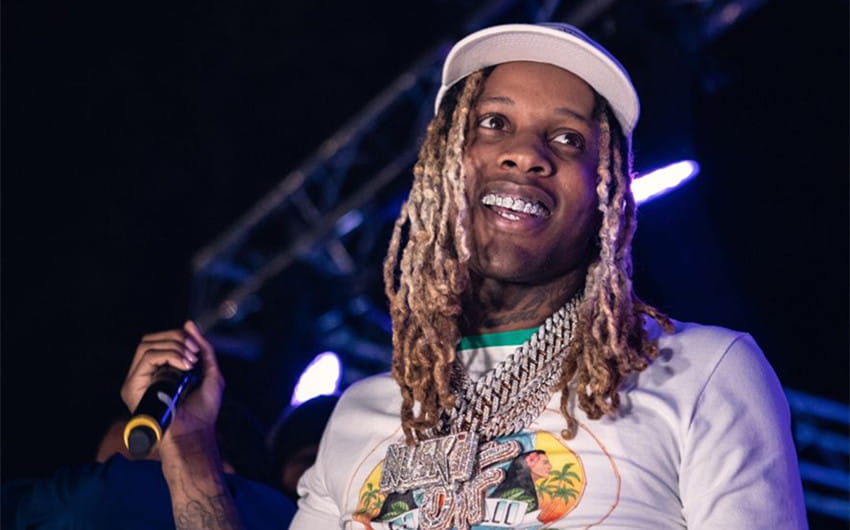
What’s Lil Durk’s Net Worth in 2026 and How He Makes Money
If you’re asking what’s lil durk’s net worth, you’re not alone—and you’re also not going to find one “perfect” number. Most widely repeated public estimates put Lil Durk in the $8 million range, with a realistic outside-guess range of roughly $6 million to $12 million depending on what you count, what you can verify, and what’s happening behind the scenes. The real story is how he earns, what he owns, and what he likely spends to keep the machine running.
The quick answer: what’s Lil Durk’s net worth right now?
A practical estimate for Lil Durk’s net worth in 2026 is around $8 million, with a range that can stretch higher or lower based on private deal terms, taxes, and business structures. You’ll see different sites toss out numbers like $4 million, $10 million, or even $12 million, but most “middle-of-the-road” estimates keep circling back to that $8M-ish neighborhood.
If you want to think about it like a grown-up (not like a gossip headline), treat net worth as a moving target—especially for an artist whose income can spike during a hot year and dip when touring slows.
Why net worth estimates for rappers vary so much
You can’t pull up an artist’s bank balance like it’s a scoreboard. A net worth estimate is basically a best-guess math problem built from partial info.
Here’s why the numbers swing wildly:
- Music contracts are private. Advances, royalty splits, and bonus clauses aren’t public.
- Touring revenue isn’t profit. A tour can gross big money and still have huge costs.
- Taxes and fees are brutal. Management, lawyers, agents, security, and business expenses add up fast.
- Assets are hard to verify. Real estate, investments, and ownership stakes aren’t always documented publicly.
- Timing matters. One big album year can change the picture. A quiet year can shrink it.
So when you see one “exact” number, treat it like a headline-friendly estimate, not a guaranteed fact.
Music is still the main engine: streaming and catalog money
Lil Durk’s core wealth driver is still the obvious one: music.
Even if you don’t buy albums anymore, streaming pays artists over time through royalties. If you’re consistently popular and you have a deep catalog, you can earn money while you sleep—because older songs keep getting played.
Your biggest music-related income buckets usually look like this:
- Streaming royalties (Spotify, Apple Music, YouTube, etc.)
- Album sales (digital + physical, even if smaller than in past decades)
- Publishing (money tied to songwriting/composition)
- Performance royalties (certain broadcasts/uses can pay out)
- YouTube monetization (views, ads, and channel activity)
The key thing to understand: the more durable your catalog, the more your income shifts from “one-time hit” to “steady flow.” Durk’s long run in the game helps here.
Touring: the biggest checks, but also the biggest bills
If you’re wondering how rappers jump from “successful” to “rich,” touring is often the answer.
Touring can be a major money-maker because you’re stacking income from:
- ticket sales
- VIP packages
- merch sales
- sometimes festival guarantees
But touring is also expensive. Real expensive.
A serious tour can require:
- travel (buses, flights, hotels)
- staff (road managers, techs, security)
- production (lighting, sound, visuals)
- insurance
- venue cuts and promoter splits
So when you see tour numbers online, remember: gross revenue isn’t what goes into the artist’s pocket. Still, for a popular artist, touring is usually one of the biggest drivers of annual income.
Features and collaborations: getting paid to show up on someone else’s song
Features can be a sneaky-big income stream. When you’re in demand, you can charge significant fees for:
- guest verses
- hooks
- quick collaborations
- sometimes even “package” deals tied to other business relationships
You also gain value in a second way: features keep you in circulation. More exposure often means more streams, more demand, and more leverage for future deals.
If you’ve noticed Durk is frequently featured with major artists, that’s not just musical—it’s business.
Only The Family and brand-building beyond songs
Lil Durk isn’t just a rapper who releases music. He’s also tied to Only The Family (OTF) as a brand and label identity.
When you build a label/collective brand, your earnings can expand beyond your personal discography because you potentially benefit from:
- artist development and releases under the banner
- business partnerships tied to the label name
- merch tied to the brand
- higher leverage in negotiations because you represent more than one revenue stream
Even if you don’t know the exact ownership structure (because you probably can’t), the point is simple: artists who evolve into brand operators often build longer-term wealth than artists who rely only on songs.
Brand deals and endorsements: the quiet money
Endorsements can be huge, but they often show up quietly. Not every paid relationship looks like a big commercial. Sometimes it’s:
- a sponsored post
- a capsule merch drop
- a partnership appearance
- a brand-backed event
- a “creative collaboration” with payment baked in
This kind of money can boost net worth fast, especially if you’re strategic and don’t overexpose yourself.
Businesses and investments: where real wealth can grow
You’ll see frequent chatter about Durk branching into business, and that’s exactly what many high-earning artists try to do once they’ve built a loyal fanbase.
Why? Because business ownership can outlast music cycles.
Common artist-side moves include:
- investing in companies (quietly or publicly)
- buying real estate
- launching merch lines
- starting service businesses (like transportation/logistics, food, or retail)
- partnering in nightlife or events
The important thing is not whether every rumor is true—it’s that this is how artists turn “income” into “wealth.”
Lifestyle, spending, and the costs people forget
Net worth isn’t only about what you earn. It’s about what you keep.
And rappers at Durk’s level often have major ongoing costs that the internet ignores:
- taxes (federal, state, city, plus business taxes)
- commissions (manager, agent, lawyer)
- security and travel
- payroll for staff
- housing and property maintenance
- support for family and inner circle
- production costs for videos, marketing, and releases
Even if you’re bringing in millions, your burn rate can be intense. That’s why two artists with the same income can end up with wildly different net worth.
A realistic way to think about Lil Durk’s net worth
If you want a grounded way to understand what’s lil durk’s net worth, try this mental model:
- He has multiple high-income streams (music, touring, features, brand).
- He likely has meaningful expenses (teams, taxes, lifestyle, operations).
- His wealth is probably real but not perfectly visible (private deals, private assets).
- Most reasonable public estimates cluster around $8 million, but a range makes more sense than a single number.
So, if you’re looking for a number to repeat: about $8 million is the most commonly cited ballpark. If you’re looking for a smarter answer: $6M–$12M is a more honest range based on how entertainment finances work.
Featured image source: Pinterest